My DBS Surgical Technique & Philosophy
Surgery is not a procedure. It is a conversation between a surgeon, a patient, and a brain - and the outcome depends as much on judgment as it does on technical skill.
My Philosophy - Why I Choose DBS
I became a functional neurosurgeon because DBS is, in my view, the most elegant intervention in all of neurosurgery. A few millimetres of electrode placement can restore a hand's ability to write, give a voice back its steadiness, allow a body imprisoned by dystonia to move freely again.
No medication achieves this. No other surgical intervention comes close. But DBS demands humility - the brain is not forgiving of imprecision. Over more than 20 years, I have developed an approach that places precision, personalisation, and patient safety above all else.
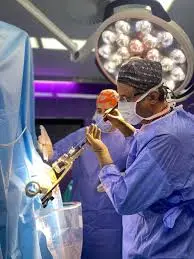
Awake vs. Asleep DBS
Awake DBS Surgery
I use microelectrode recording (MER) to listen to the electrical signature of individual neurons. The patient plays an active role - I may ask them to hold their hand steady or perform a simple movement. Their real-time responses guide my final electrode placement.
- Preferred for STN targeting in Parkinson's
- Real-time target confirmation
- Ideal for patients who can tolerate the procedure
Asleep DBS Surgery
For patients who cannot tolerate awake surgery - due to anxiety, severe dyskinesia, or other factors - I perform asleep DBS using intraoperative CT or MRI-guided electrode placement. Comparable outcomes with modern imaging resolution.
- Preferred for significant anxiety
- Ideal for pediatric cases
- Excellent for certain VIM targets
Precision Targeting
Target selection is the most important decision I make for each patient.
Primary for Parkinson's. Reduces motor fluctuations, dyskinesia, and tremor.
Target for Essential Tremor. Produces immediate, dramatic tremor reduction.
Preferred for Dystonia and certain Parkinson's cases. Lower psychiatric risk.
For treatment-resistant OCD - chosen based on the symptom profile.
Primary target for Tourette Syndrome tic reduction.
Step-by-Step: Surgery Day
6:00 AM - Arrival
Arrival at the hospital and final pre-operative assessment by our clinical team.
7:00 AM - Preparation
Anaesthesia or sedation begins. Frame placement or imaging fusion is performed.
8:00 AM - Surgery Begins
Electrode advanced to target. MER or intraoperative imaging verifies the position.
Stage 2 - IPG Placement
The pacemaker (IPG) is implanted under the skin of the upper chest, typically on the same day.
Selecting the Right Device
We use exclusively FDA-approved systems used at leading global centers.
BrainSense technology. Long-term safety data. Non-rechargeable options.
Directional leads. 3T MRI compatibility. Clinically advantageous current steering.
8 independently controllable contacts. Maximum programming flexibility.
My Standards
- I personally perform every surgery.
- Every electrode placement is verified before closure.
- I personally programme every patient's device.
- Direct 24-hour line to my team for post-op support.